
Core Features and Advantages:
High Efficiency & Rapid Response: Utilizing specialty ceramics (such as alumina or silicon nitride) as the substrate and heating body, these heaters offer excellent thermal conductivity and low thermal mass. This enables ultra-fast heating to operational temperatures within seconds, concentrating thermal energy with minimal loss, thereby significantly improving energy efficiency compared to conventional methods.
Exceptional Durability & Stability: The ceramic material inherently possesses superior high-temperature resistance, corrosion resistance, and oxidation resistance. High-power ceramic heaters can operate stably for extended periods in high-temperature (some models exceeding 1600°C), harsh chemical environments, or under frequent thermal cycling, boasting a lifespan far beyond that of common alloy heating wires and greatly reducing maintenance and replacement costs.
Precise Temperature Control & Uniform Heating: Their flexible structural design allows for excellent controllability of the heating zone. When paired with high-performance sensors and control systems, they can achieve temperature control with precision up to ±1°C or higher. Planar or custom-shaped heating elements provide a highly uniform temperature field, meeting the stringent requirements of applications like precision experiments, semiconductor processing, and high-end coating.
Compact Design & Flexibility: Ceramic heaters can be fabricated into various shapes (plates, tubes, rings, custom geometries), featuring a compact size for easy integration into diverse equipment. Their excellent electrical insulation allows for a live surface, enhancing safety, and enables direct contact heating for greater efficiency.
High Power Density: Capable of handling very high power loads within a limited space, they deliver robust heating capacity, making them ideal for industrial applications requiring rapid temperature rise of large volumes or high-flow media.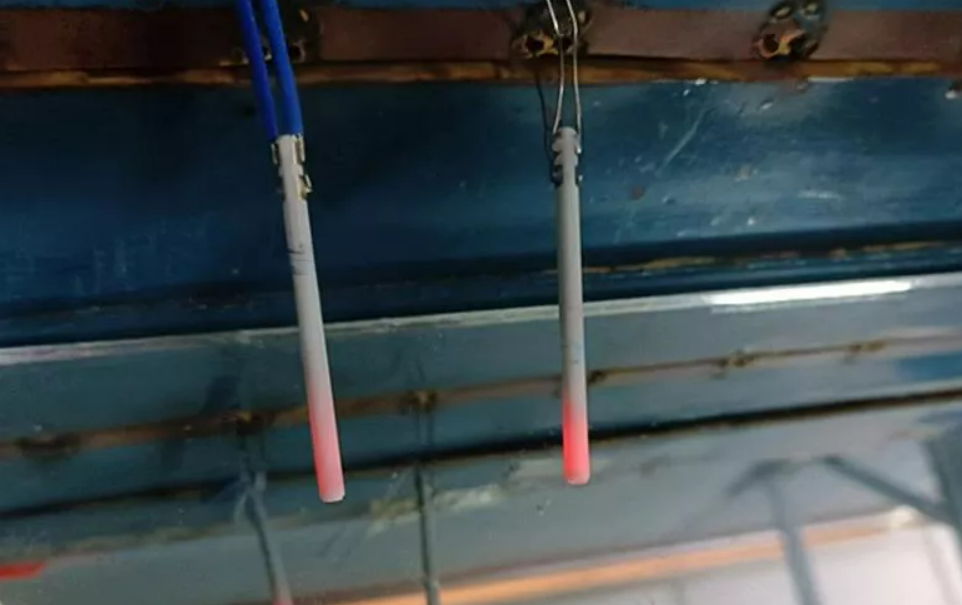
Broad Application Spectrum:
Currently, high-power ceramic heaters are widely used in:
Industrial Manufacturing: Plastic machinery (injection molding, extruders), packaging equipment, hot pressing, drying, and curing lines.
Semiconductor & Laboratories: Wafer processing, vacuum coating equipment, analytical instruments, high-precision constant temperature baths.
Appliances & Consumer Electronics: Instant hot water dispensers, premium electric heaters, coffee machines.
Automotive & Aerospace: In-vehicle rapid heating devices, battery pack thermal management testing.
Market Outlook and Challenges:
As global "Dual Carbon" goals advance and industries upgrade, the demand for higher energy efficiency, precision, and reliability in heating equipment continues to grow. The market for high-power ceramic heaters is projected to expand steadily. However, challenges such as relatively high manufacturing costs and the inherent brittleness of the material requiring careful handling against mechanical shock remain areas for ongoing R&D and application optimization. Advancements in material science and manufacturing processes will be key to driving performance breakthroughs and cost-effectiveness.
Experts indicate that the future of high-power ceramic heaters lies in achieving higher temperature limits, greater power density, enhanced intelligence (with IoT and AI integration for temperature control), and improved thermal shock resistance. They are poised to provide core solutions for green, intelligent manufacturing and precision thermal processing across various sectors.

